
Georgian Wine Labels: A Practical Guide for Sommeliers and Buyers
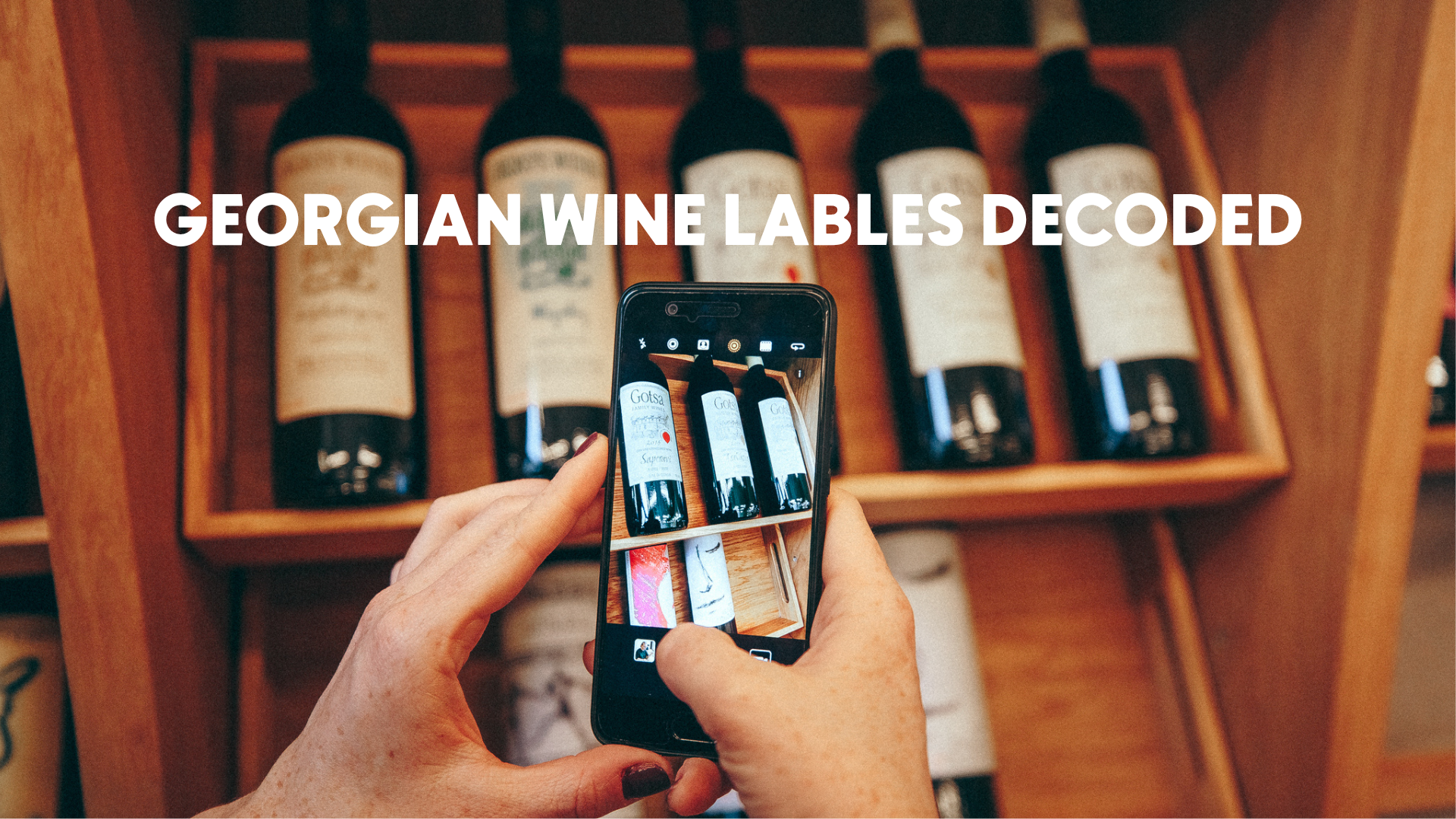
Image Credit : Daria Kholodilina
6th April 2026
Georgian wine labels can feel confusing if you approach them with expectations shaped by France, Italy or Spain. They rarely give you a strict hierarchy of locations, and of course, the names of grape varieties or winemakers’ surnames can be long and confusing.
Nevertheless, there is a logic to them, and once you understand it, most bottles become much easier to place stylistically and commercially.
The key is to start looking at the label as a combination of three elements: grape, method and place.
GRAPE VARIETY
In Georgia, the grape variety is often the most reliable indicator of what is in the bottle. This is a different mindset from regions where place dominates. In Georgia, grapes often come first, and often indicate the region, too, as certain grapes work best in certain regions.
More than 90% of Rkatsiteli comes from Kakheti. This is a grape with high acidity with a fairly neutral aromatic profile that reflects winemaking choices very clearly (we can't avoid comparing it with Chardonnay and Chenin Blanc because of this flexibility).
Kakhuri Mtsvane is a Kakhetian grape with more pronounced aromatics, brisk acidity, orchard fruits and subtle blossom on the nose. It is often blended with Rkatsiteli, to combine more substantial body and pleasant aromas, but is also often used alone, both in white and amber wines.
Kisi and Khikhvi grapes tend to be more aromatic and are often positioned as premium Kakhetian varieties, both for the classical whites and particularly for amber wines.
Tsitska and Tsolikouri grapes are often blended together and indicate the region of origin, Imereti. The wines usually have light to medium body, notes of citrus, cumquat, honey melon.
Tsolikouri also grows in Racha, Lechkhumi, Guria and Ajara, so it's a kind of Western Georgia's Rkatsiteli. Ubiquitous and stylistically flexible.
Saperavi, as a teinturier grape, brings deep ruby colour, ample tannins and overall intensity.
Shavkapito, a red from Kartli, has lively acidity, medium tannins and is quite elegant even in the boldest versions.
Aladasturi, a pan-Western red that is popular in Imereti and Guria, is always a fun, fruit-forward wine. A bunch of red berries, a bit of pepper, and not too many layers.
Otskhanuri Sapere, a flagship red from Imereti, is the opposite: heavier, with big tannins, it needs time in the bottle to develop. Young Otskhanuri is usually astringent.
For a sommelier, this is already enough to sketch the wine. You can anticipate weight, acidity and general direction before you even look at anything else.
METHOD
The second layer is how the wine is made, and this is where Georgian labels diverge most from the classic European model.
The presence or absence of qvevri is central. If the label mentions qvevri, kvevri, amphora, clay jar or sometimes “Georgian traditional”, you should expect a different structure, particularly with white grapes. Skin contact is common in these wines, which shifts them towards amber colour, adds tannin and changes how they behave with food.
If the method is not stated, the safer working assumption is a more modern style, usually made in stainless steel, sometimes with subtle oak influence depending on the producer and PDO.
Oak can appear in certain PDOs or in wines positioned as export-oriented. However, the label may not always clearly state the ageing regime, so this is where producer knowledge and context still matter.
For practical purposes, the method is what tells you how the grape has been interpreted. It is often more important for service than the region itself.
PLACE
Geographical indication in Georgia provides context rather than a fixed style definition. PDOs can suggest a direction.
Kakheti remains the core region, covering a wide stylistic range. Within it, specific PDOs produce certain types of wines.
Kindzmarauli is a naturally semi-sweet red wine made from Saperavi grape, typically with noticeable fruit sweetness balanced by acidity.
Mukuzani refers to dry Saperavi, often with oak ageing, usually giving a more tannic, elegant, age-worthy style.
Khashmi is also based on Saperavi. It is dry, concentrated and astringent when young.
Manavi is known for classical white wines, from Kakhuri Mtsvane, typically lighter and fresher in style.
Tsarapi is an amber wine PDO in Kakheti, again based on Rkatsiteli, with full body and pronounced aromas of dried fruits and spices.
Akhoebi is less widely known internationally, but associated with big red wines from Kakheti.
Outside Kakheti, Khvanchkara in Racha is one of the best-known PDOs, producing naturally semi-sweet red wines from Aleksandrouli and Mujuretuli, with a lighter body and aromatic profile compared to Saperavi-based wines.
Bolnisi, in Kvemo Kartli, is increasingly visible, with both white, amber and red wines, often from a mix of local and international varieties, and a growing reputation for diverse, smaller-scale production.
What these PDOs do is narrow the range of expectations. They do not remove variation, but they help you understand where the wine is likely to sit.
COLOUR
One of the recurring points of confusion is the relationship between grape colour and wine colour.
In Georgian labelling, “white wine” often refers to the grape, not necessarily to the final appearance in the glass. A Rkatsiteli labelled as white can be pale and fresh if made without skin contact, or deep amber with tannin if made in qvevri.
For a sommelier, the rule is simple: trust the method more than the colour designation. If qvevri is involved, especially with white grapes, expect structure and colour to shift accordingly. Some wineries still would call their amber wine “white qvevri wine".
MARKETING
Terms such as reserve, premium, exclusive or special selection appear on many labels but do not have a consistent legal meaning in Georgia.
They can indicate how a producer positions the wine, but they do not provide reliable, standard information about ageing, quality level or style.
For practical reading, they are secondary. The core information remains grape, method and place.
For buyers and sommeliers, this means that tasting and up-to-date knowledge remain essential. The label gives you a framework, but not the final answer.
Interest in Georgian wine in the UK is growing, particularly around amber/orange styles, which are among the fastest rising search categories.
A team that can read the label confidently and translate it into a clear, simple explanation will always have an advantage on the floor and at the point of sale.
