
Georgian Supra: a feast, a tradition, a diplomatic tool
16th March 2026
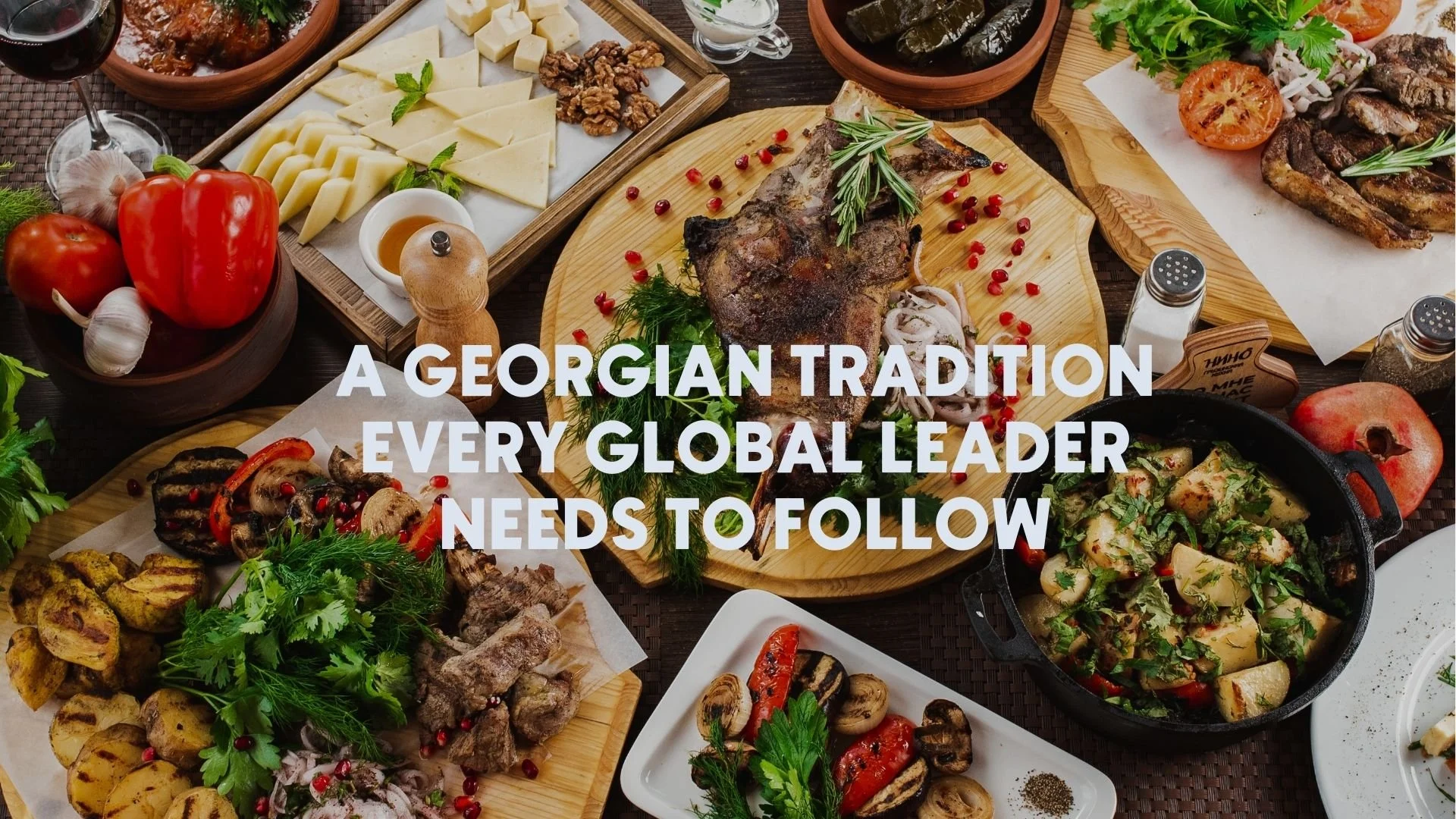
A Georgian supra is often translated as a feast, but that word barely describes the reality. Yes, there is a lot of food and wine, but the real point of the table is conversation. A supra is where people talk about life, family, memory, the country, sometimes even politics, but in a very particular way.
We wanted to tell you more about this cultural phenomenon, so that you'll be ready for your wine trip to Georgia (don't tell us you're not eyeing those direct British Airways or Easyjet tickets for summer!)
TAMADA: MORE THAN AN MC
At the centre of everything is the tamada, the toastmaster. A good tamada is crucial. He is usually someone educated, eloquent, and respected - a person who can guide the table without making it feel rigid. His job is to set the themes of the toasts and keep the conversation flowing. Traditionally this role is taken by a man. The tamada starts with a toast to peace, family, ancestors, or guests, and occasionally invites others to speak.
The toast itself is the real engine of the supra. Through these short speeches people express gratitude, memories, admiration, or even disagreement - but always within the boundaries of politeness.
Georgian hospitality rules are strong. Even if you don’t entirely agree with what someone said, you are unlikely to turn the table into a battlefield. The ritual slows everyone down: one person speaks, others listen, glasses are raised, and the next toast follows. Complex subjects can be discussed, but they rarely spiral into quarrels.
One very old rule of the Georgian feast required all guests to leave their weapons aside before sitting at the table. The tamada would remind everyone to do so at the beginning of the meal. The weapons were kept by the elders of the house until the feast ended.
This rule existed precisely because feasts often brought together people with complicated relationships - rival nobles, neighbours in dispute, political allies negotiating something sensitive. By removing weapons, the supra created a space where even enemies could sit together without fear of violence.
THE SECRET OF STAMINA
The rhythm of the meal also plays a role. Contrary to the stereotype, people don’t just drink endlessly. Food keeps arriving, often in waves. A supra table can easily include dishes from different parts of Georgia: khachapuri from Samegrelo, khinkali from the mountains, the Imeretian staple like satsivi (cold poultry dish) with walnuts, lobio, pkhali, aubergines with walnut paste, Kakhetian favourites such as grilled meats, mtsvadi, and slow-cooked dishes such as chakapuli. Many of these plates appear on the table at the same time, so you move from one to another, tasting a bit of everything.
This variety explains another interesting detail: people at supras often prefer white or amber wines. Many Georgians feel that red wine is simply too heavy for such a long, food-rich meal. Amber wines, made of white grapes fermented with skins, have just enough tannin and structure to work with the food without becoming overwhelming. With so many walnut-rich appetisers, herbs, and dishes that are roasted, boiled, or stewed, amber wine becomes a kind of universal solution. It sits comfortably next to pkhali and aubergines, but also works with mtsvadi or a slow-cooked lamb dish.
You might also notice that the glasses are often surprisingly small, sometimes closer to the size of a Turkish tea glass than a typical wine glass. That’s practical. Many toasts traditionally require finishing the glass, and if the glass were large, the evening would end far too quickly. Small glasses keep the rhythm manageable.
THE TIMES THEY ARE A-CHANGING, TRADITIONS REMAIN
Supras themselves come in different styles. Festive supras - weddings, big birthdays, major family gatherings - tend to have longer, more poetic toasts. People take their time, stories are told, and the speeches can become quite beautiful. When friends gather around a kitchen table on an ordinary evening, the same structure is there, but the toasts are shorter and more relaxed.
Travellers noticed this culture long ago. When the French writer Alexandre Dumas travelled through Georgia in the 19th century, he was struck by the generosity of the Georgian table. In his travel notes he wrote:
“In Georgia the table never seems to end. The dishes succeed one another without pause, and the wine flows with a generosity that equals the hospitality of the people.”
Two centuries earlier, the French traveller Jean Chardin made a similar observation while travelling through the region. What impressed him most was not just the abundance, but the warmth with which guests were received:
“The Georgians are the most hospitable people I have met; a stranger is welcomed to their table as if he were a friend of many years.”
Recently, you might have witnessed this hospitality and generosity in several TV shows, from Jamie Oliver's Jamie Cooks: Georgia episode, to Drops of God on Apple TV and Somebody Feed Phil on Netflix. Cameras aside, Georgians are exactly the same: warm and welcoming.
Sitting at a supra, you understand what old times’ travellers and contemporary TV hosts meant. The table fills with dishes, the glasses are raised again and again, and somehow the evening becomes less about food and drink and more about people: their stories, their respect for each other, and the unbreakable rules that keep the whole thing together.
WHEN TO EXPERIENCE A GEORGIAN SUPRA IN THE UK?
While we are convinced that the best way to feast in a truly Georgian way is to go to Georgia, there is a fantastic shortcut with a British accent!
The London restaurant DakaDaka just launched their Supra Sunday Roast - a communal shared meal celebrating Georgian gastronomy and British urge to get together over a hearty Sunday meal. Give it a try!
